Travel businesses · 3 min read ·
AI Chatbots for Travel Websites: Help Visitors Choose a Trip with Confidence
Travel shoppers compare more than destinations. They need to understand what is included, how strenuous an itinerary feels, and what happens if plans change. A travel website chatbot can make those distinctions easier to explore.
Discuss your travel businesses website →What a useful chatbot changes for travel businesses
A traveller may compare two similar-looking trips that feel completely different in practice. Walking demands, transfers, free time, and booking conditions can decide which one they choose. A website assistant should unpack those details from your itineraries so the customer reaches an advisor with a clearer picture of the trip they want.
Pilot a small group of comparable itineraries. Make daily activities and inclusions concrete, and give time-sensitive or personal requirements a clear advisor route.
Clarify the itinerary experience
Describe activities concretely instead of calling every trip suitable for everyone. Travellers can compare the schedule against their own preferences.
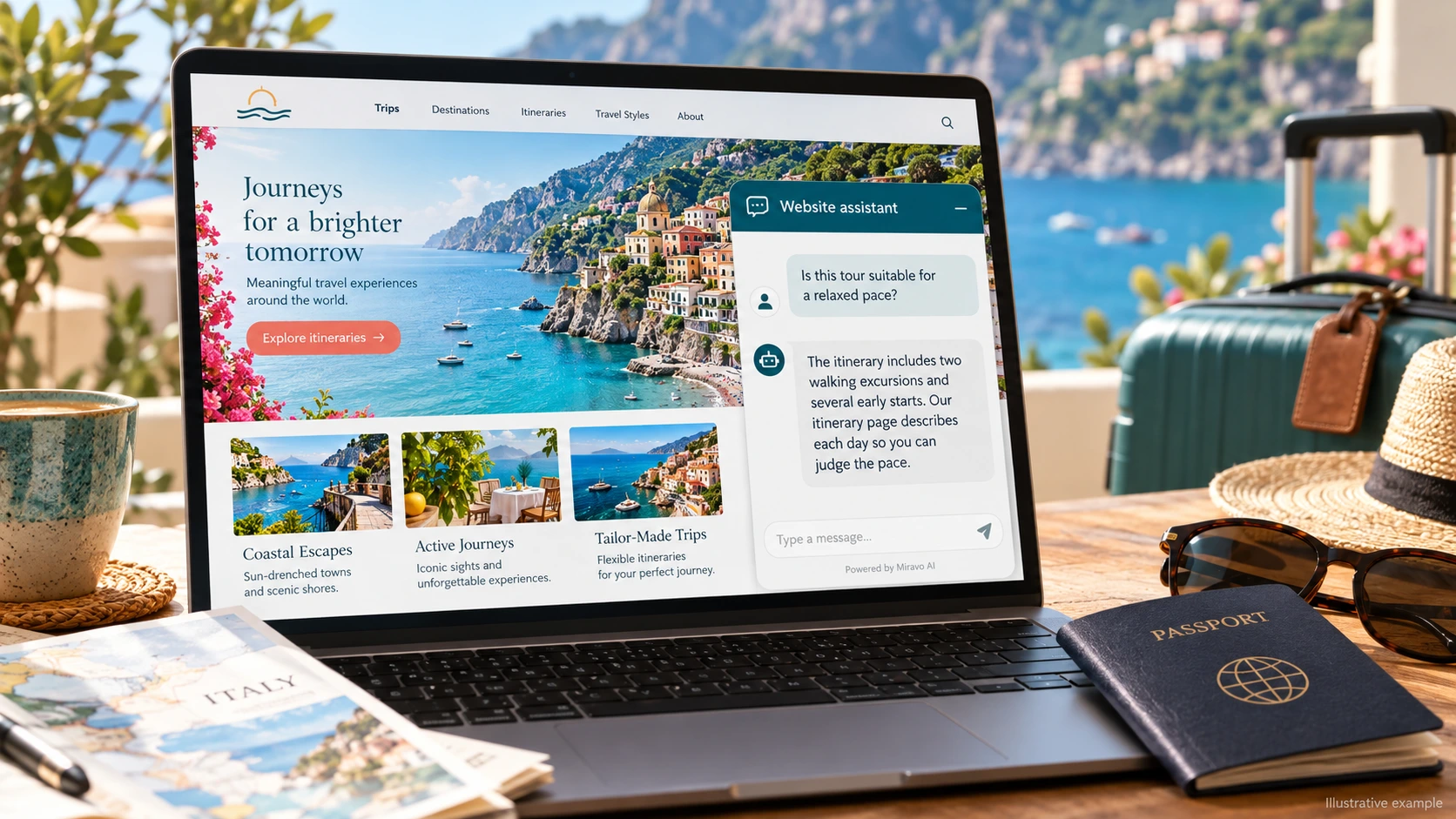
- Visitor
- Is this tour suitable for a relaxed pace?
- Example assistant reply
- The itinerary includes two walking excursions and several early starts. Our itinerary page describes each day so you can judge the pace.
Unpack the inclusions
Small exclusions can change the buying decision. Give the assistant the same inclusions checklist your advisors use when explaining a package.
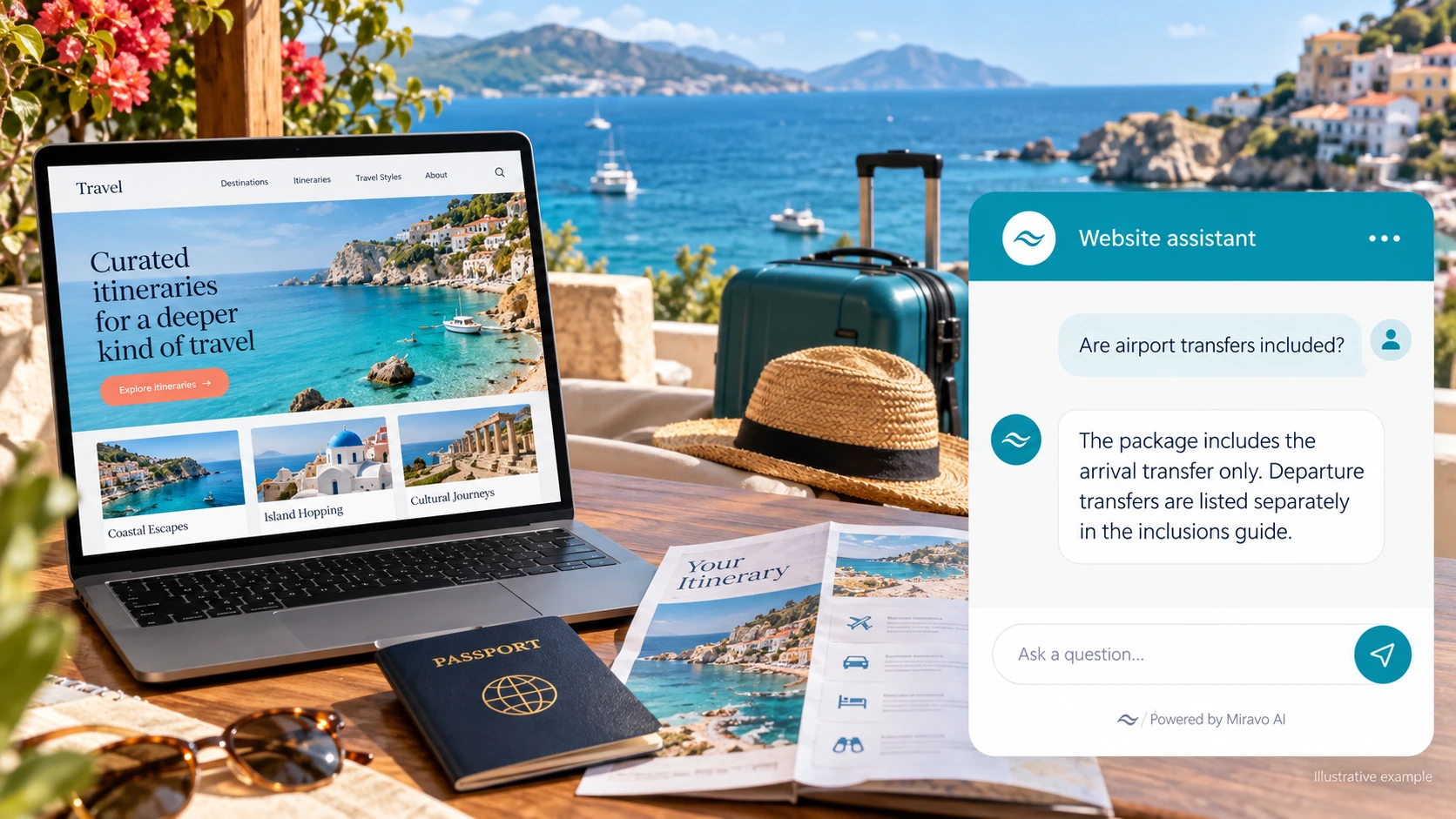
- Visitor
- Are airport transfers included?
- Example assistant reply
- The package includes the arrival transfer only. Departure transfers are listed separately in the inclusions guide.
Handle changes before a deposit
The assistant should explain the process and identify when a person must check the booking. It should not invent refundable terms or current room availability.
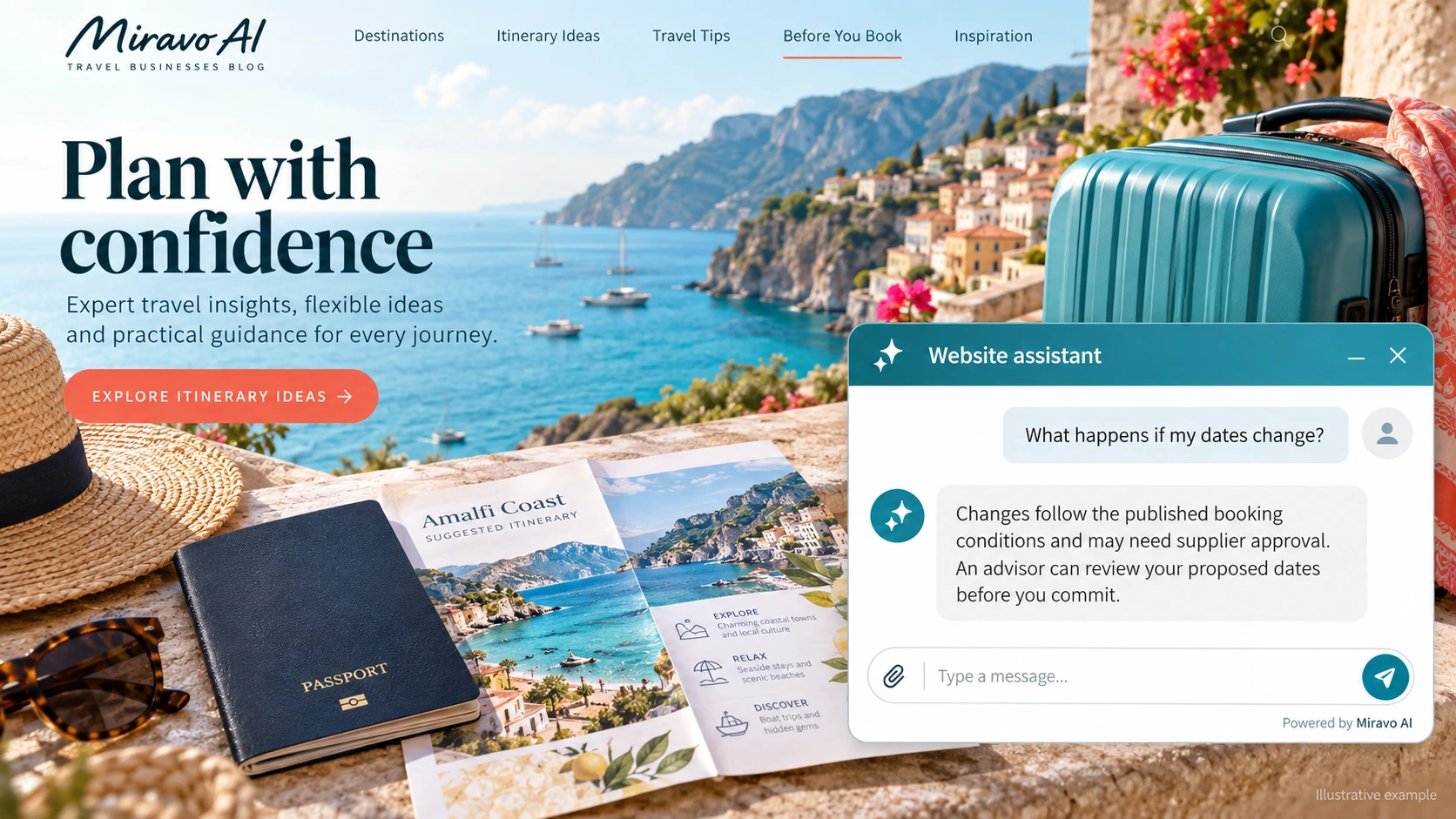
- Visitor
- What happens if my dates change?
- Example assistant reply
- Changes follow the published booking conditions and may need supplier approval. An advisor can review your proposed dates before you commit.
Build a knowledge base that answers real buyer questions
| Source to prepare | Question it should answer | Editorial review |
|---|---|---|
| Day-by-day itineraries | Is this tour suitable for a relaxed pace? | Explain walking, early starts, and transfers using the day-by-day schedule. Avoid a broad suitability label that hides the actual experience. |
| Package inclusions | Are airport transfers included? | List what the package includes and identify what the traveller must arrange separately. A quoted package price should retain those boundaries. |
| Booking and change conditions | What happens if my dates change? | Explain the published change process before a deposit. Supplier review and traveller-specific conditions need the advisor's attention. |
For source preparation, read how to train your chatbot on website content.
A review scenario before launch
Walk through a package with an optional airport transfer and a traveller who needs step-free access. Ask which days involve independent travel. The itinerary should supply the activity detail; unanswered accessibility arrangements should become specific questions for the operator before booking.
- An accessibility question
- An excluded transfer
- An unconfirmed departure date
Work through the pre-launch checklist before rolling out more pages.
How to judge whether the chatbot is helping
Review itinerary enquiries that reach an advisor with a clear destination and travel window. Use confirmed consultations and bookings from your own records to assess value.
Questions about a chatbot for travel businesses
Can chat confirm trip availability?
Only a verified availability workflow can establish current capacity. A source-backed assistant can explain the departure and help the traveller request confirmation from your team.